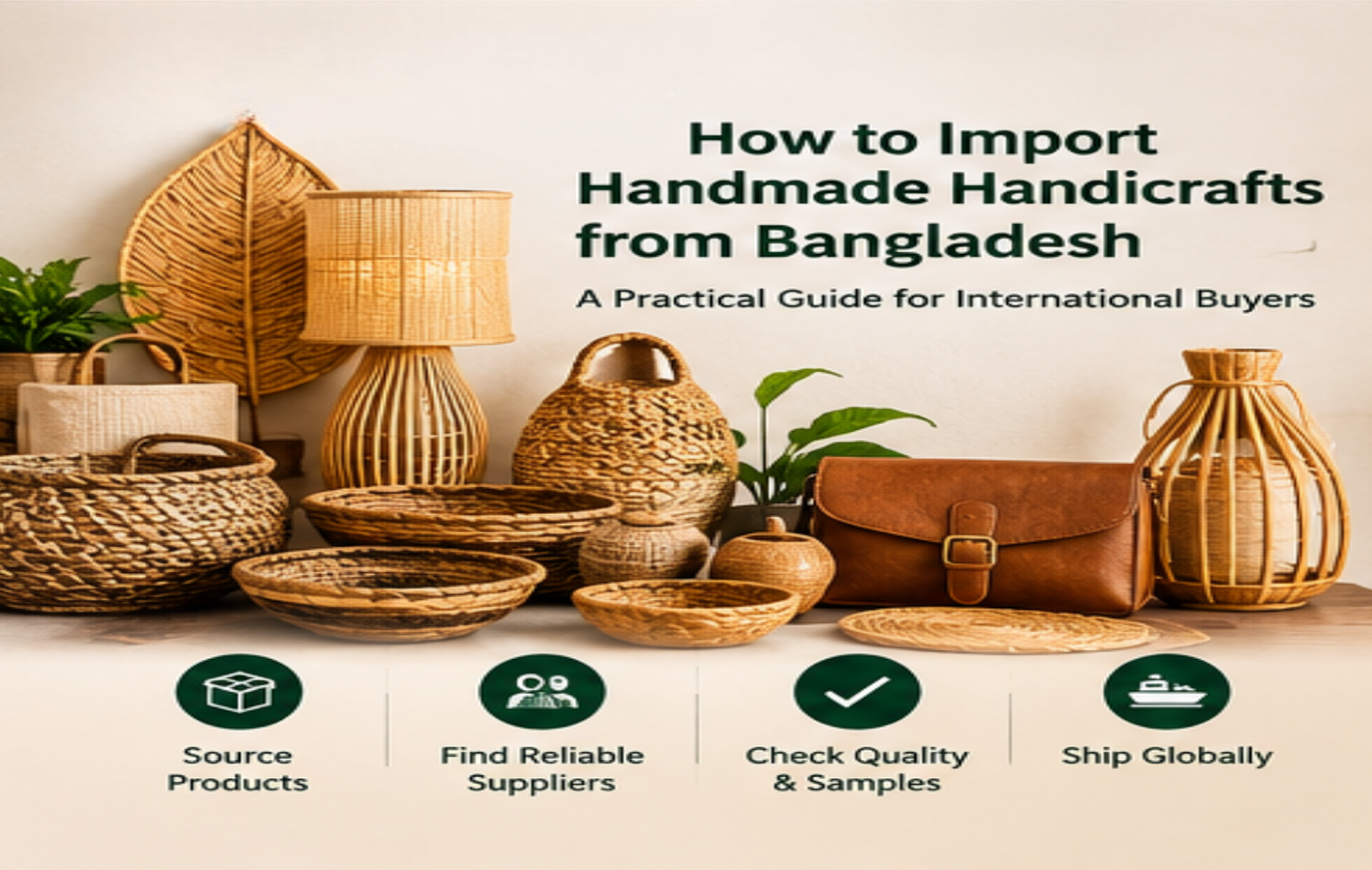
How to Import Handmade Handicrafts from Bangladesh: A Practical Guide for International Buyers
Learn how to source handmade baskets, bamboo crafts, jute décor, palm fiber products, and other Bangladeshi handicrafts for your business.
Handmade handicrafts can help retailers and lifestyle brands
offer products with distinctive textures, materials, and designs.
Bangladesh has a long tradition of handicraft production,
including woven products, natural-fiber home décor, baskets, mats, and other
handmade goods.
For international buyers, importing these products can
create opportunities in home décor, gifting, lifestyle retail, hospitality, and
specialty stores.
However, successful importing requires more than finding an
attractive product. Buyers must also consider supplier verification, samples,
specifications, production timelines, packaging, and shipping.
This guide explains the main steps involved in sourcing
handmade handicrafts from Bangladesh.
Step 1: Decide Which Products You Want to Import
Start by identifying your target market and the types of
products your customers are likely to purchase.
Potential product categories include:
Jute handicrafts: Bags, table runners, placemats,
rugs, storage products, and decorative accessories.
Bamboo and cane products: Baskets, trays, organizers,
and selected home accessories.
Palm leaf fiber products: Decorative baskets, storage
containers, hats, and handmade accessories.
Water hyacinth products: Woven baskets, home storage
items, and decorative products.
Handmade home décor: Lampshades, wall decorations,
table accessories, and selected lifestyle products.
Leather goods: Wallets, bags, organizers, and
accessories, subject to material specifications and applicable import
requirements.
The right product selection depends on your target
customers, available budget, market regulations, and intended sales channel.
Step 2: Research Your Target Market
Before contacting suppliers, investigate the products
already available in your destination market.
Research:
- Competitor
products and selling prices
- Popular
dimensions, colors, and designs
- Customer
expectations for quality
- Packaging
and labeling requirements
- Seasonal
buying patterns
- Product
safety and material restrictions
- Potential
demand for customized products
For example, a retailer serving a premium home décor market
may prioritize sophisticated designs and coordinated collections.
A promotional merchandise company may focus more on
customization, branding, price, and delivery schedules.
Market research helps you develop a clearer product brief
before requesting quotations.
Step 3: Identify a Suitable Supplier or Export Partner
The supplier you choose should understand your product
category and be able to communicate clearly about specifications, pricing,
production, and shipping.
When evaluating a potential partner, ask:
- Can
the supplier provide the product you need?
- Are
samples available?
- Can
the supplier accommodate your order quantity?
- Is
customization possible?
- What
quality checks are performed?
- Can
the supplier support export documentation and shipping coordination?
- What
are the expected production and delivery timelines?
Request business details and relevant product information
before proceeding.
For customized or high-value orders, consider additional
verification and an independent inspection where appropriate.
Step 4: Request Samples and Confirm Specifications
Samples help buyers evaluate whether a product meets their
expectations before committing to bulk production.
Your product specification should clearly state:
- Product
name and model
- Materials
and material composition
- Dimensions
and tolerances
- Weight,
where relevant
- Color
and finishing
- Handle
or structural details
- Branding
requirements
- Packaging
instructions
- Acceptable
handmade variations
- Inspection
and approval criteria
For handmade products, minor differences in color, texture,
or weave may occur.
Agreeing on acceptable variations in advance can help avoid
disagreements after production.
If the sample is approved, retain the approved reference and
ensure that the bulk-order specifications match it.
Step 5: Calculate the Total Import Cost
The supplier's quoted product price is only one component of
the total landed cost.
Depending on the shipment and trade terms, buyers may need
to account for:
- Product
manufacturing cost
- Customization
and branding
- Packaging
- Inland
transportation
- Export
handling
- Freight
charges
- Insurance,
where applicable
- Import
duties and taxes
- Customs
clearance
- Destination
transportation
- Warehousing
and handling
Request a quotation that clearly identifies the agreed trade
term and which costs are included.
For example, under an agreed FOB arrangement, the seller's
and buyer's responsibilities differ from those under CIF or other Incoterms.
Confirm the applicable Incoterms version and named port or
place in the sales contract. Ask your freight forwarder or trade adviser to
explain any unfamiliar terms before payment.
Step 6: Confirm Payment, Production, and Delivery Terms
Before placing an order, make sure the commercial agreement
clearly defines:
- Order
quantity
- Unit
price and currency
- Payment
schedule
- Production
lead time
- Sample
approval
- Quality
requirements
- Packaging
specifications
- Shipping
terms
- Delivery
arrangements
- Procedures
for handling defective goods or discrepancies
For larger orders, buyers may consider staged inspections or
other appropriate quality-control measures.
Avoid relying solely on informal messages when important
commercial obligations are involved.
Step 7: Prepare Export and Import Documentation
The required documents depend on the product, destination
country, shipment type, and applicable regulations.
Common documents may include:
- Commercial
invoice
- Packing
list
- Bill
of lading or air waybill
- Certificate
of origin, when required
- Relevant
export and customs declarations
- Product-specific
certificates or permits, where applicable
Some natural materials, plant-derived products, leather
goods, and treated wooden or bamboo items may be subject to additional
destination-country requirements.
Importers should confirm the correct customs classification
and applicable restrictions before shipment.
The exporter, importer, customs broker, and freight
forwarder should coordinate the necessary documents to avoid preventable
delays.
Step 8: Plan Packaging and International Shipping
Handmade products need packaging appropriate for their
structure and transportation conditions.
For example, woven baskets may need protection against
crushing, while decorative products may require additional cushioning.
Before shipment, confirm:
- Carton
dimensions
- Gross
and net weight
- Number
of units per carton
- Moisture
protection, where appropriate
- Product
labeling
- Palletization
requirements, if applicable
- Shipping
marks
- Final
shipping documents
Request photographs or inspection records before dispatch
when appropriate for the order.
Why Work with Miti’s Mart?
Miti’s Mart supports international buyers seeking products
from Bangladesh, including jute goods, natural-fiber handicrafts, handmade home
décor, lifestyle products, and leather accessories.
Our export service can assist with product inquiries,
customization discussions, quality checks, packaging requirements,
documentation coordination, and shipping arrangements based on the agreed
order.
We encourage importers to share their product
specifications, quantity, destination country, target price, and preferred
shipping terms so that the requirements can be reviewed.
Conclusion
Importing handmade handicrafts from Bangladesh can offer
opportunities for retailers, wholesalers, distributors, and lifestyle brands.
The key is to choose appropriate products, verify suppliers,
approve samples, document specifications, calculate total costs, and confirm
the applicable import requirements.
Ready to explore handmade products from Bangladesh?
Visit Miti’s Mart or
contact our team through the Export
Service page to discuss your sourcing needs.
Recent Posts