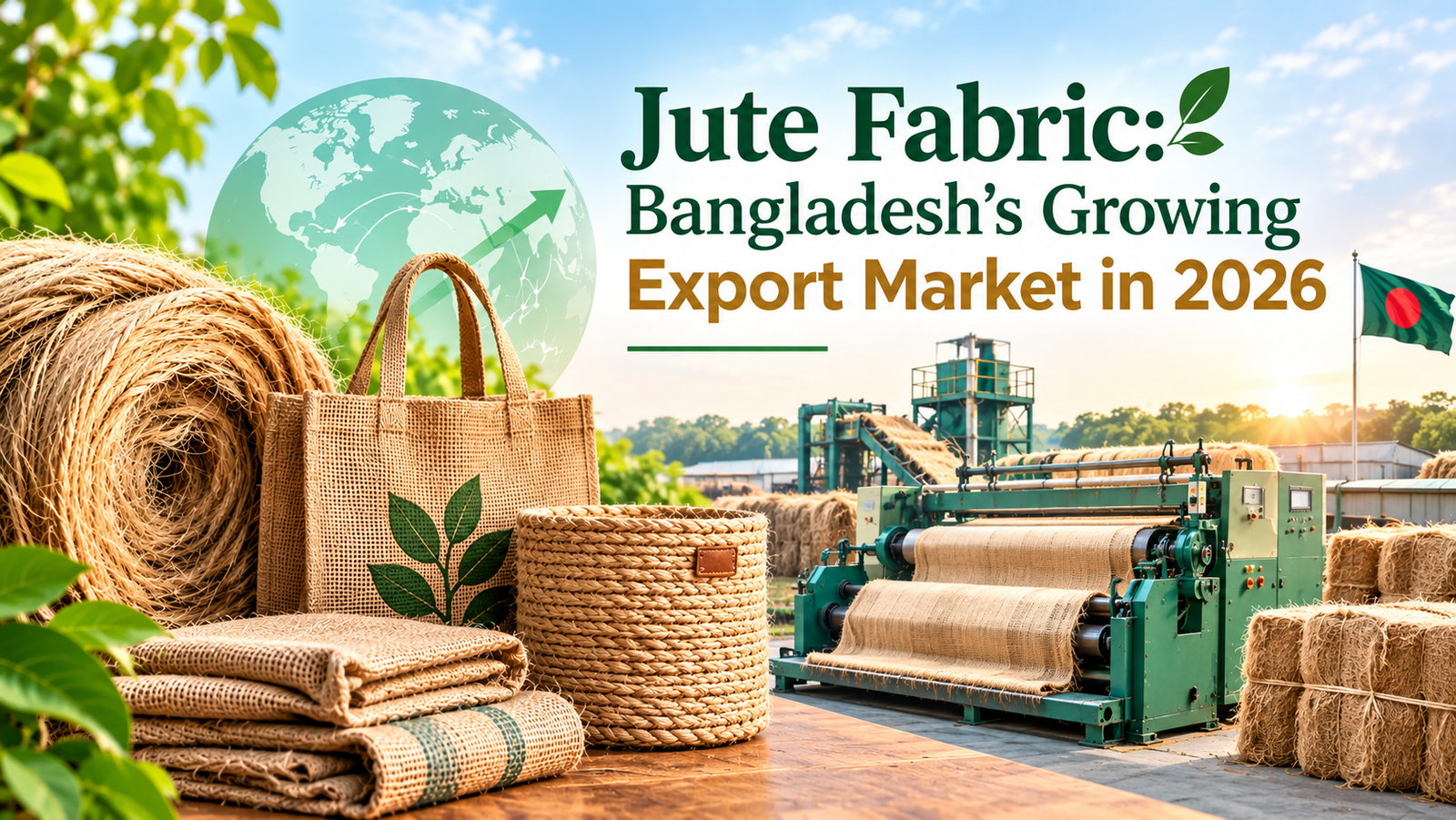
Jute Fabric: Bangladesh's Growing Export Market in 2026
Bangladesh supplies 73% of global jute exports. Explore market size, buyer demand, product trends & why jute fabric is a smart sourcing choice in 2026.
Jute Fabric: Why Bangladesh Leads the World's Golden Fiber Market
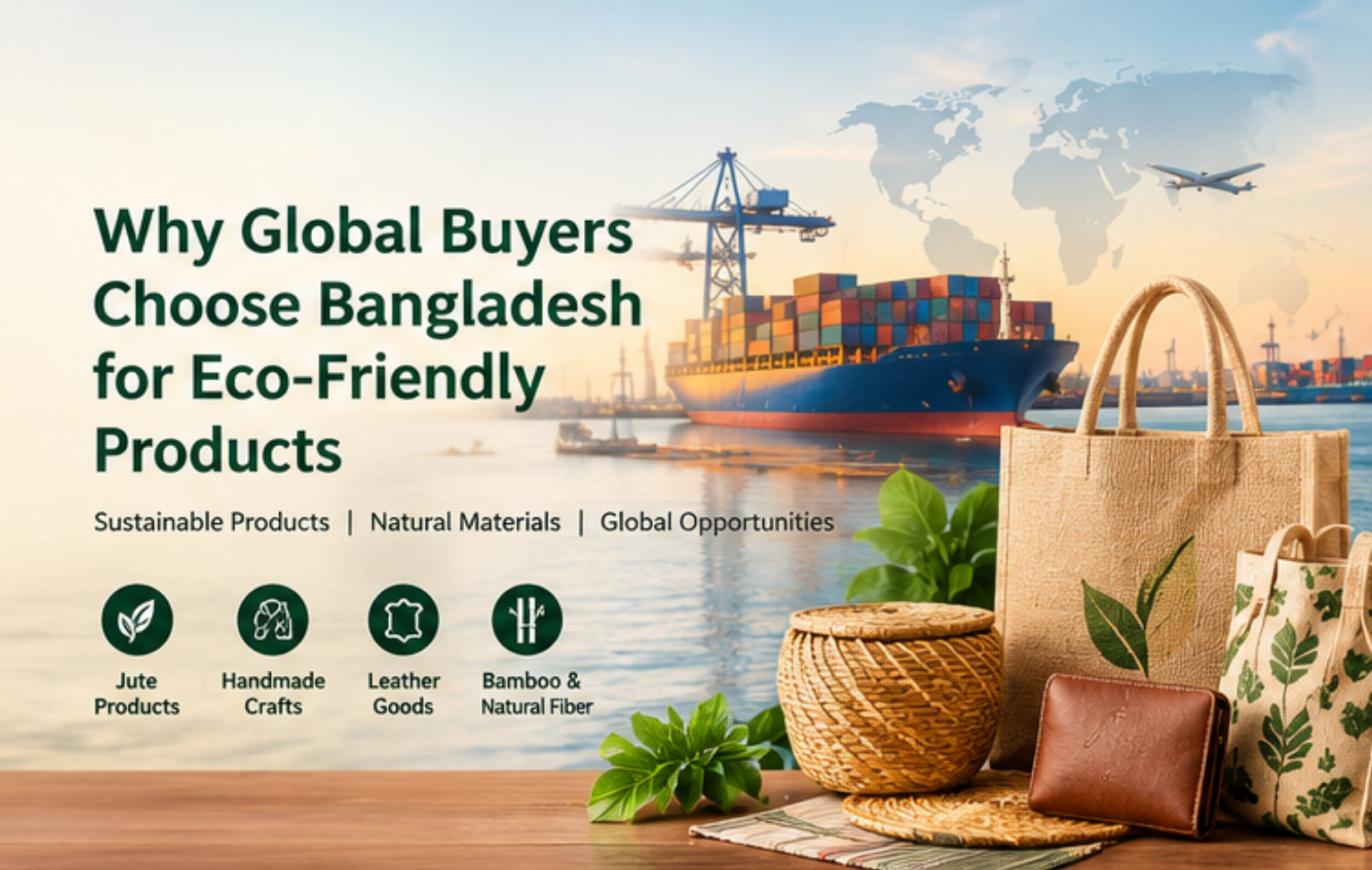
For generations, jute has been woven into the identity of Bangladesh. Known locally as the "Golden Fiber," it has supported farming communities, driven rural economies, and shaped the country's trade relationships across continents. Today, jute is experiencing something of a revival — and Bangladesh sits at the center of it.
For international buyers evaluating sustainable materials, understanding Bangladesh's jute market is no longer optional. It is a strategic advantage.
Bangladesh's Position in the Global Jute Market
Bangladesh is the world's leading supplier of jute and jute-like fibers, accounting for roughly 73% of global export value. The country also leads global production, contributing a significant share of total world output alongside India and Cambodia.
In FY 2024/25, Bangladesh exported approximately 751,739 tones of jute goods, alongside 42,039 tones of raw jute. These figures reflect not just volume, but a deeply established supply infrastructure — mills, skilled labor, and generations of accumulated expertise that newer market entrants simply cannot replicate quickly.
Government ambition is matching industry momentum. Bangladesh has set a target of transforming its jute sector into a $5–7 billion export-oriented industry through modernization, research investment, product diversification, and stronger private sector participation.
Why Jute Demand Is Growing Worldwide
1. The Plastic Replacement Movement
Governments across Africa, Europe, and Asia have introduced restrictions on single-use plastics. This has created immediate, practical demand for biodegradable packaging alternatives — and jute fits naturally into that gap. Agricultural sacks, grain packaging, and bulk handling bags made from jute are now standard requirements in many markets rather than premium options.
2. Sustainability Credentials That Hold Up
Unlike many "eco-friendly" claims, jute's environmental case is straightforward. It grows rapidly with minimal pesticide input, requires no irrigation in most Bangladeshi growing regions, enriches soil between crop cycles, and biodegrades completely at end of life. For brands facing genuine lifecycle scrutiny from customers and regulators, jute offers a story that survives fact-checking.
3. Movement Up the Value Chain
Jute is no longer confined to sacks and twine. Manufacturers are producing jute fabric for fashion, home textiles, upholstery, footwear, and lifestyle goods. Blended fabrics have opened entirely new margin opportunities, with some blends reportedly increasing margins by 8–12% compared to conventional alternatives.
What Global Buyers Are Actually Looking For
Buyers today evaluate jute suppliers on more than price per unit. The questions that matter most:
Consistency of weave and weight. A fabric that varies between production runs creates costly problems downstream. Reliable GSM consistency is now a baseline expectation.
Finishing quality. Lamination, coating, softening treatments, and colorfastness determine whether a jute product performs in real shipping and retail conditions.
Certification and documentation. International buyers increasingly require verifiable compliance documentation, not verbal assurances.
Communication and lead time reliability. Suppliers who respond clearly and deliver on schedule win repeat orders — often more reliably than those competing purely on price.
Key Jute Fabric Products in Demand
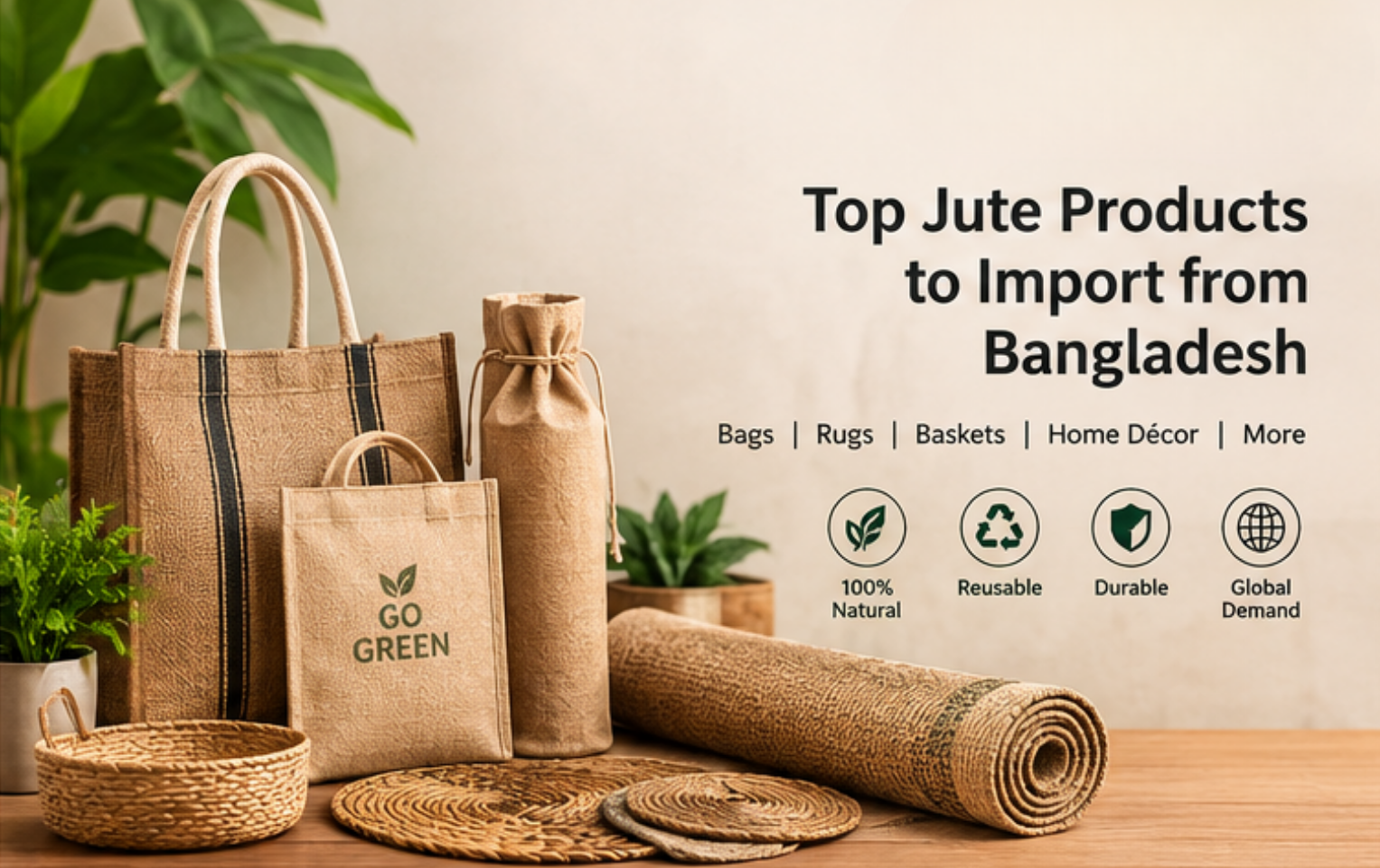
- Hessian / Burlap cloth — packaging, agriculture, craft, and retail display
- Jute canvas — bags, upholstery, and structured products
- Laminated jute fabric — moisture-resistant applications, promotional goods
- Jute blends — fashion and home textile applications requiring softer handfeel
- Decorative jute fabric — interiors, table linen, wall coverings, and gift packaging
Challenges Worth Understanding
An honest picture includes the obstacles. Bangladeshi exporters continue to navigate gas supply constraints, high interest rates, and volatile global trade conditions. Raw jute pricing fluctuates with harvest quality and weather patterns. Seed import dependency remains a structural issue the government is actively working to resolve through self-sufficiency initiatives.
For buyers, this makes supplier selection meaningful. Established exporters with diversified sourcing relationships and production capacity absorb these pressures far better than smaller, undercapitalized operations.
The Outlook Ahead
Bangladesh's jute sector is shifting from volume competition toward value creation. Investment is flowing into modern machinery, technical fabric development, and downstream product innovation. Export markets are diversifying beyond traditional regional destinations toward Africa, Europe, and North America.
For importers, distributors, and brands building sustainable product lines, the window to establish reliable Bangladeshi jute sourcing relationships is open now — while capacity is available and partnerships can be built on genuine collaboration rather than urgent necessity.
Working With the Right Partner
At Miti's Mart, we work with international buyers to source jute fabric and finished jute products that meet real commercial requirements — not just specification sheets. From selecting the appropriate weave and weight for your application through to finishing, quality control, and export documentation, our role is to make sourcing from Bangladesh straightforward and dependable.
If you are exploring jute fabric for packaging, retail, fashion, or home décor applications, we would be glad to discuss what's possible.
Recent Posts