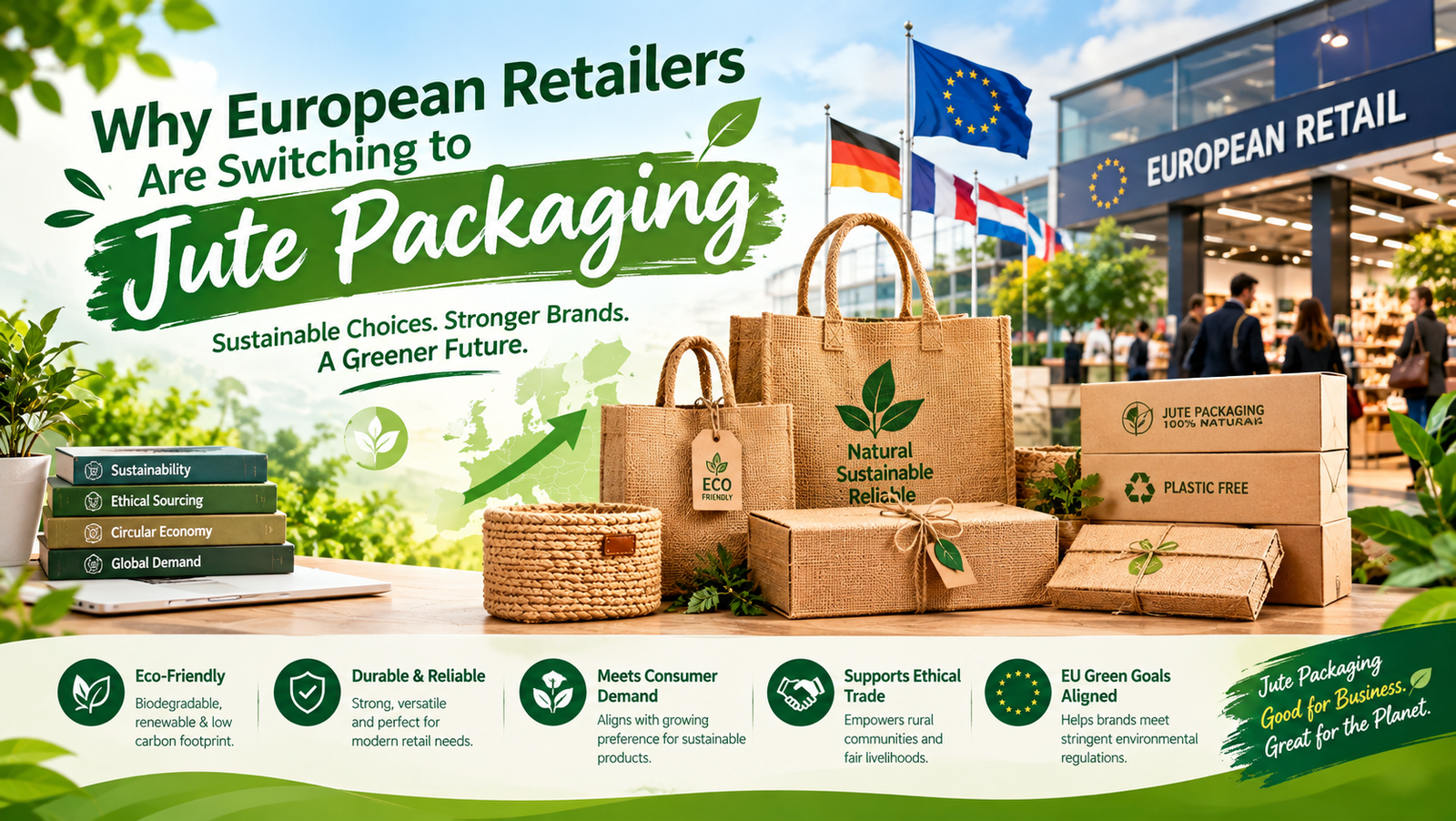
Why European Retailers Are Switching to Jute Packaging
The EU's 2026 Packaging Regulation is pushing retailers away from plastic. Discover why jute packaging is becoming the go-to sustainable alternative.
Why European Retailers Are Switching to Jute Packaging
For years, "sustainable packaging" was a marketing choice European retailers could make if they wanted to. As of 2026, it's becoming a legal requirement — and that shift is sending buyers looking for alternatives that actually work at scale. Jute is emerging as one of the clearest winners.
The Regulation Driving the Shift
The EU's Packaging and Packaging Waste Regulation (PPWR) entered into force in February 2025, and its rules began applying on a phased basis from 12 August 2026. This isn't a minor update — it replaces the previous Packaging Waste Directive entirely and introduces binding, EU-wide requirements rather than the patchwork of national rules retailers previously navigated.
The core obligations are significant: all packaging placed on the EU market must be recyclable by 2030, certain single-use plastic formats will be banned outright from 2030 where sustainable alternatives exist, and harmful "forever chemicals" (PFAS) are being restricted in food-contact packaging. Member states also face binding targets to cut packaging waste per capita — at least 5% by 2030, rising to 15% by 2040, measured against 2018 levels.
For retailers, this changes the calculation entirely. Without action, the EU projected packaging waste would grow by 19% by 2030, with plastic packaging waste alone rising by as much as 46%. Regulators built the PPWR specifically to reverse that trajectory — and compliance isn't optional.
Why Jute Fits the Moment
Retailers scrambling to redesign packaging ahead of PPWR enforcement need materials that check several boxes simultaneously: genuinely biodegradable, recyclable or reusable, free of the chemical restrictions now in force, and available at commercial scale. Jute meets all four.
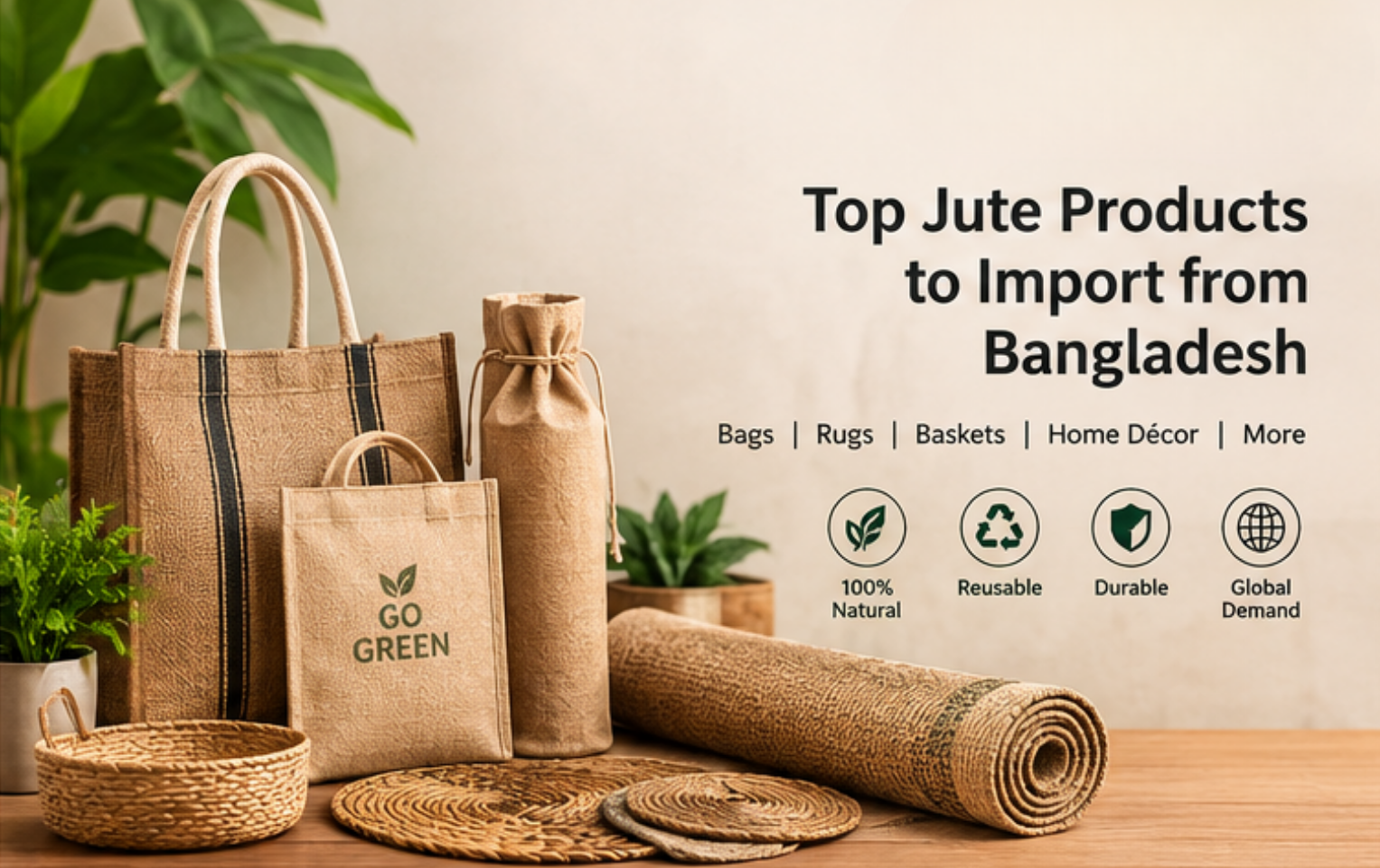
It's naturally biodegradable and chemical-free. Unlike many plastic alternatives that still rely on chemical treatments or coatings to function, raw jute fabric decomposes completely without leaving microplastic residue or PFAS-related compliance headaches.
It's already proven at industrial scale. This matters more than it might seem. Many "eco-friendly" materials look good in pilot programs but struggle when a retailer needs millions of units reliably. Jute has been produced at industrial volume for over a century, primarily out of Bangladesh, which means the supply chain, quality standards, and manufacturing expertise already exist — retailers aren't betting on unproven technology.
It supports reusable packaging formats. The PPWR pushes retailers toward reusable and refillable formats, not just recyclable disposal. Jute bags and totes are inherently suited to repeat use in ways that thin-film plastic never was, aligning naturally with where the regulation is heading rather than requiring a workaround.
The compliance cost math favors switching now. With phased enforcement already underway and further restrictions arriving through 2030, retailers who wait typically face higher redesign and compliance costs than those who transition proactively while suppliers still have available capacity.
Beyond Regulation: The Consumer Angle
Compliance is the immediate driver, but it isn't the only one. European consumers increasingly scrutinize packaging choices as part of a brand's broader sustainability claims, and jute's environmental case holds up under that scrutiny in a way many alternatives don't — it requires minimal pesticide input to grow, enriches soil between growing cycles, and fully biodegrades at end of life. For retailers already navigating greenwashing concerns, that's a genuinely defensible story rather than a marketing exercise.
What This Means for Sourcing Decisions
Retailers moving on this now are prioritizing suppliers who can demonstrate three things: consistent product quality across large order volumes, clear documentation supporting sustainability and compliance claims, and reliable lead times that account for 2026's tighter shipping conditions out of major jute-exporting regions.
This is where established, export-experienced suppliers have a real advantage over newer entrants — the difference between a retailer meeting its 2026 compliance deadline smoothly and scrambling at the last minute often comes down to who they chose to source from.
Sourcing Jute Packaging With Miti's Mart
We work directly with international retailers and brands navigating exactly this transition — helping source hessian, jute canvas, and laminated jute fabric suited to packaging applications, backed by consistent quality and documentation that supports compliance reporting. If your business is reassessing packaging materials ahead of PPWR requirements, we're glad to help you figure out what a transition would actually look like.
Recent Posts